
Diesel Oil Changes in January: Don't Pour the Wrong Jug
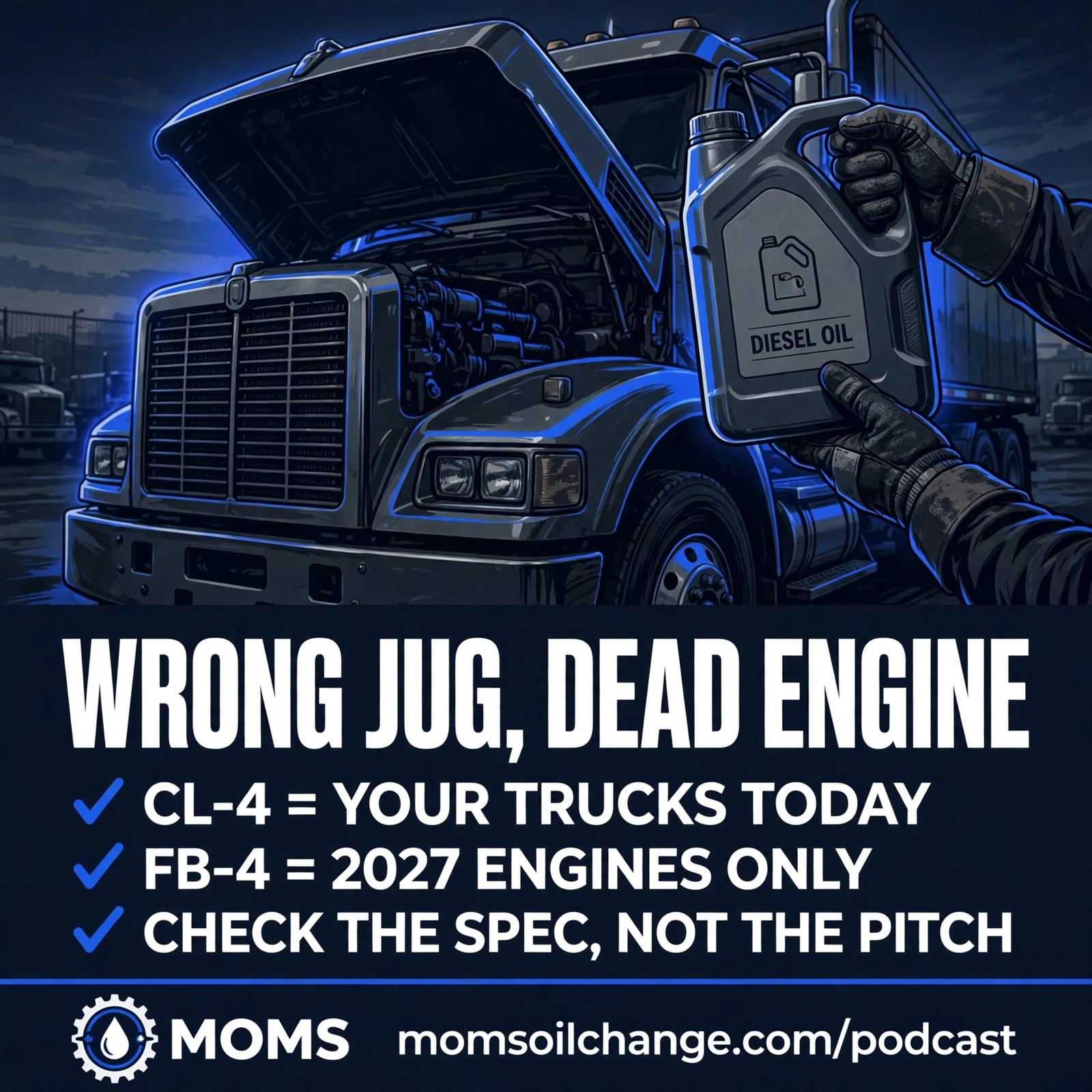
PC-12 arrives in January: CL-4 for the trucks you own, FB-4 only for 2027 engines — know your category before the wrong jug costs you an engine.
Share this episode
Every share includes a caption, call to action, and hashtags — just pick your platform.
🎙️ Diesel Oil Changes in January: Don't Pour the Wrong Jug PC-12 arrives in January: CL-4 for the trucks you own, FB-4 only for 2027 engines — know your category before the wro... Press play and listen 👇
https://momsoilchange.com/podcast/diesel-oil-changes-in-january-dont-pour-the-wrong-jug-2026-11-12
#MobileOilChange #momsoilchange #servicewriter #AutoIndustry #SmallBusiness #PhillyBusiness
LinkedIn doesn't accept pre-filled text — we copy the caption for you automatically.
Full Transcript
Tyreese: Presented by MOMS Mobile Oil Change. Good morning. Welcome in. Thursday, November twelfth, and if you run anything with a diesel in it, today's the morning to pay attention, because the oil your trucks drink is about to change, and the wrong jug in January could cost you an engine.
Tyreese: Here's the signal. FreightWaves laid this out back on October fifteenth, and I'm pulling it forward now because the clock is the story. Starting in January, the American Petroleum Institute rolls out a brand-new heavy-duty diesel oil category called PC-12. This is the first real category change in about ten years. The last one landed in twenty sixteen, before that two thousand six. And here's the part that trips people up. PC-12 is not one oil. It splits in two. The first is CL-4. Think of that as the direct successor to the CK-4 you've been running for years. It's backward compatible, it covers the trucks you already own, and it comes in the grades you already buy: fifteen W forty, ten W thirty, five W thirty. The second is FB-4. That's the thin, fuel-economy oil, built around new grades like zero W twenty and five W twenty, and it is not backward compatible. It only belongs in model-year twenty twenty-seven and newer engines that were designed around it. Pour it into your current truck chasing better mileage and you're not saving fuel. You're buying wear.
Tyreese: Why now? The twenty twenty-seven emissions standards are pushing engine makers to build cleaner, hotter, tighter engines, cutting nitrogen oxide by roughly eighty percent, and the oil has to keep up. The new category also pulls back on the old anti-wear chemistry. Phosphorus drops from around twelve hundred parts per million under CK-4 to a ceiling of eight hundred under CL-4. The formulators say new additives make up the difference, and Shell Rotella's team put fifteen million miles of field trials behind that claim, including two Detroit Diesel D D fifteens past seven hundred thousand miles that came apart clean. That's the manufacturer's own data, so take it as encouraging, not as gospel. Your own used-oil analysis is the referee that matters.
Tyreese: Here's the thing, though. For most of us, this switch is a non-event if we do one thing right: know your category. Your current trucks take CL-4. Your twenty twenty-seven trucks, when they show up, take FB-4. And the single mistake that actually hurts is pouring the thin stuff into an older engine because somebody at the counter pitched you fuel savings.
Tyreese: So here's the tactic. Don't stockpile, don't panic, and don't let anybody sell you a jug on a fuel-economy promise. Buy to the spec your engine maker publishes, keep your receipts and your oil-analysis records, and if you run a fleet, put the two letters on the shelf label. CL-4 for everything you own today. FB-4 only for the new iron. That label is the whole system. A tech grabbing the wrong jug at six in the morning is how a routine service turns into a warranty fight.
Tyreese: And the action for today, before your first job: walk out to the truck you service most, or pull the spec sheet for the newest diesel in your fleet, and write down which category and viscosity that engine actually calls for. One truck, one line, on paper or in your phone. Then check the jug on your shelf against it. If they match, you're done, and January is a non-event for you. If they don't, you just found the gap while there's still seven weeks to fix it.
Tyreese: That's the morning. Know your oil, label your shelf, and keep the trucks earning. I'll see you tomorrow morning.
New episodes every weekday. Subscribe via RSS to get them in your podcatcher.
Book Your Oil Change