(215) 767-2125Mon–Sat 8:00 AM – 7:00 PM
Detecting your service area…Contact us →
Oil change service costs are rising, and the pressure is reaching drivers and fleet managers across Philadelphia, Montgomery County, and the broader U.S. market. Since February 2026, comparable retail motor-oil products have increased by an average of 24.2%, according to a matched-product review from JobbersWorld. This is not simply a story about crude oil. It […]
djoreally@gmail.com
Oil Change Expert
Oil change service costs are rising, and the pressure is reaching drivers and fleet managers across Philadelphia, Montgomery County, and the broader U.S. market. Since February 2026, comparable retail motor-oil products have increased by an average of 24.2%, according to a matched-product review from JobbersWorld.
This is not simply a story about crude oil.
It is a story about crude volatility, the Strait of Hormuz, constrained base-oil supply, higher logistics costs, and the operating model used to deliver vehicle maintenance.
For fixed-location service businesses, rising inputs often lead directly to higher customer prices. For fleets, however, the larger opportunity is controlling the cost around the oil change: technician travel, vehicle downtime, dispatching, and lost productivity.
That is where mobile maintenance changes the equation.
The past six months have produced extreme swings in global crude markets.
The U.S. Energy Information Administration’s August 2026 Short-Term Energy Outlook reported that Brent crude fell as low as $69 per barrel on July 2, then climbed as high as $105 per barrel on July 23 after renewed attacks on tankers and reduced shipments through the Strait of Hormuz.
EIA now expects Brent to average approximately:
| Period | Brent crude outlook |
|---|---|
| July 2, 2026 low | $69 per barrel |
| July 23, 2026 high | $105 per barrel |
| Q3 2026 forecast | Approximately $85 per barrel |
| Q4 2026 forecast | Approximately $78 per barrel |
| 2027 forecast | Approximately $69 per barrel |
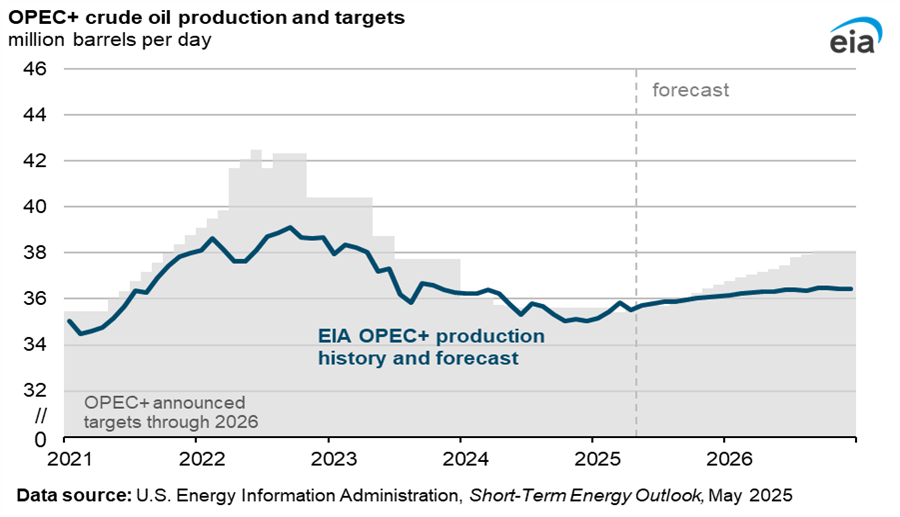
The important point is not just the average price. It is the uncertainty.
A business can budget more effectively around a stable $85 barrel than around a market that moves from $69 to $105 in a matter of weeks. Volatility makes procurement, pricing, and inventory planning more difficult throughout the lubrication supply chain.
The Strait of Hormuz is a critical energy chokepoint. EIA estimates that crude oil and petroleum liquids moving through the strait averaged 4.9 million barrels per day in the second quarter of 2026, down from 21.6 million barrels per day in the fourth quarter of 2025.
That disruption affects more than gasoline and diesel.
The United States is a net importer of certain base oils, particularly Group III base oil, which is widely used in full synthetic motor oils. Group III base oil is important for modern low-viscosity formulations such as 0W-20 and many OEM-approved synthetic products.
According to reporting from NPR, more than 45% of U.S. Group III imports come from the Middle East. The conflict has disrupted both shipping and production. Damage to Qatar’s Shell Pearl gas-to-liquids facility also removed a significant source of Group III supply.
This creates a supply problem with several layers:
Crude oil is only one component of motor oil pricing. Finished lubricant costs also include base oil, additives, packaging, transportation, labor, inventory carrying costs, and distributor and retail margins.
That is why a change in crude prices does not translate into an identical change at the service counter. The effect is delayed, uneven, and often larger for synthetic products that depend on constrained Group III supply.
JobbersWorld compared 97 directly matched motor-oil products at the same major U.S. big-box retail channel. Prices observed on February 2 were compared with prices observed on August 10.
The result: prices were collectively 24.2% higher.
The breadth of the increase is significant:

This is not a perfect market-wide price index. It is a point-in-time comparison of matched retail products. Product formulation, package size, inventory age, brand, and retailer pricing strategy all affect the result.
Still, the direction is clear. The lubricant pricing cycle has reached the consumer shelf.
For vehicle owners, that means a routine oil change may cost more even when the vehicle, labor time, and service procedure have not changed.
Traditional fixed-location shops operate with a cost structure built around a physical facility.
That structure can provide important advantages for complex repairs. But it also creates fixed costs that continue whether a bay is busy or empty:
When oil, filters, wages, insurance, and parts all rise together, many fixed-location operators have limited choices. They can reduce margins, raise prices, reduce staffing, or pass more of the increase to customers.
That is not necessarily poor management. It is often the predictable result of the operating model.
The old model asks the customer to spend time traveling to the shop, waiting for service, and returning to work or home. In a market where time and operating costs are both rising, that model increasingly resembles the new Blockbuster Video: familiar, established, and less competitive because it requires the customer to do the work of getting there.
Mobile maintenance does not make base oil inflation disappear. MOMS Mobile Oil Change still purchases quality lubricants, filters, parts, equipment, insurance, and professional labor.
The difference is where the service takes place.
We come to you.
For a consumer, that means an oil change at your house, in your driveway, or at your office. For a fleet manager, it means an on-site fleet service program that reduces vehicle transfers and keeps technicians from spending productive hours driving vehicles to a shop.
MOMS’s fleet maintenance program is built around:
The savings are operational rather than theoretical.
A parked service truck does not generate revenue. A delivery van sitting in a waiting room does not complete deliveries. A technician traveling across town to drop off or retrieve vehicles is not serving customers.
Mobile fleet maintenance attacks those hidden costs by servicing vehicles where they already sit.
Fleet managers and operations directors should not respond to supply pressure by choosing an oil that fails to meet the manufacturer’s requirements.
The correct response is control.
That includes:
Confirming the required viscosity and OEM specification.
Do not substitute a product solely because it is available. A 0W-20 or 5W-30 label is not enough by itself. The oil must meet the required performance standard.
Standardizing approved products where possible.
A fleet with fewer approved oil and filter combinations is easier to schedule, stock, track, and invoice.
Scheduling preventive maintenance before vehicles are overdue.
Delaying service can turn a manageable maintenance cost into a major repair or an avoidable vehicle outage.
Batching multiple vehicles at one location.
Same-day service reduces dispatching friction and keeps the maintenance schedule visible.
Combining inspections with routine oil changes.
A full synthetic oil change should be an opportunity to identify worn wipers, restricted cabin air filters, dirty engine air filters, weak batteries, and developing brake concerns.
MOMS includes professional inspections with oil-change services and can also handle cabin air filter replacement, engine air filter replacement, windshield wiper replacement, and battery and brake system checks.
That matters because a filter or battery issue discovered during scheduled maintenance is easier to manage than a vehicle failure during a customer appointment or delivery route.

The market may stabilize if Strait of Hormuz traffic normalizes, disrupted production returns, and inventories begin rebuilding. EIA expects Brent prices to ease toward approximately $78 per barrel in the fourth quarter and $69 per barrel in 2027 under its current assumptions.
But lower crude prices will not immediately restore pre-2026 motor-oil pricing.
Supply contracts, damaged production capacity, inventory replacement costs, and new transportation patterns can continue affecting finished lubricants after crude markets calm down. The full synthetic products most dependent on Group III base oil may remain under the greatest pressure.
For drivers, the best strategy is simple:
For fleets, the priority is even clearer: reduce downtime.
The oil industry is operating in a period of volatility. Crude prices are moving sharply. The Strait of Hormuz remains a major supply risk. Group III base oils are constrained. Retail motor oil prices have already increased by 24.2% in a matched-product comparison.
Businesses cannot control geopolitics. They can control how maintenance is scheduled and delivered.
MOMS Mobile Oil Change helps fleets and busy drivers absorb market pressure through operational efficiency: professional technicians, premium products, on-site service, documented maintenance, and less time spent moving vehicles to a shop.
Whether you need an oil change near me in Ambler, Philadelphia, Montgomery County, or surrounding communities, the principle is the same:
Your vehicle should not have to lose half a day for routine maintenance.
Book your mobile oil change or request a fleet quote and take control of the maintenance process at your driveway, office, yard, or fleet location.
Market figures and forecasts in this article reflect information available on August 13, 2026. Crude and lubricant markets can change quickly. The 24.2% retail figure comes from JobbersWorld’s matched-product review and should not be interpreted as a universal price index for every motor-oil product or service provider.
Every share includes a caption, call to action, and hashtags — just pick your platform.
📝 Crude Volatility and the 24.2% Motor Oil Spike: Why Fixed Shops Are Passing on Inflation (And How Mobile Fleets Are Absorbing It) Oil change service costs are rising, and the pressure is reaching drivers and fleet managers across Philadelphia, Mon... Read the full article 👇
https://momsoilchange.com/blog/crude-volatility-and-the-24-2-motor-oil-spike-why-fixed-shops-are-passing-on-inflation-and-how-mobile-fleets-are-absorbing-it
#MobileOilChange #momsoilchange #servicewriter #AutoIndustry #SmallBusiness #PhillyBusiness
LinkedIn doesn't accept pre-filled text — we copy the caption for you automatically.
Expert in mobile oil change services with years of experience helping drivers maintain their vehicles.